
Ancient Delights
January writing prompts

About 3,000 years ago, King Tutankhamun was buried with jars of honey to accompany him to the afterlife.1 Sealed in those vessels, the honey outlasted the centuries and is now among the oldest delights that can still be eaten today.
It’s a fact that can only be confirmed by taste. Brave souls, archaeologists. They tasted that ancient honey and found it’s still sweet.
You’re reading Varnish, a series full of stories, facts, and prompts to inspire you the next time you sit down to write.
Special properties in honey make it remarkably resistant to bacteria and extend its shelf life. Part of the magic is in the way bees fan their wings over it as it cools, evaporating the water content and concentrating sugar.
Even older than this honey is a piece of bread discovered in Jordan. The 14,000-year-old crumbs found near an ancient fireplace show our ancestors were willing to put in the immense effort to bake in an era that predates farming. The bread was made from wild wheat and the roots of a flowering plant, with traces of barley, and fired in an oven not unlike flatbreads today in tandoori ovens. While this treat was reserved for special occasions, it may have been people’s “desire to indulge” more regularly that set them on the path toward agriculture.2
Prompts to indulge in:
What’s something that you wish would never spoil?
What would you bring with you to the afterlife?
Imagine the taste of something that can’t be eaten—or that’s forbidden to eat.
1 Excerpt from the World Atlas of Honey, University of California Press (pdf).
2 Quote from an NPR article on the 14,000-year-old bread found in Jordan.
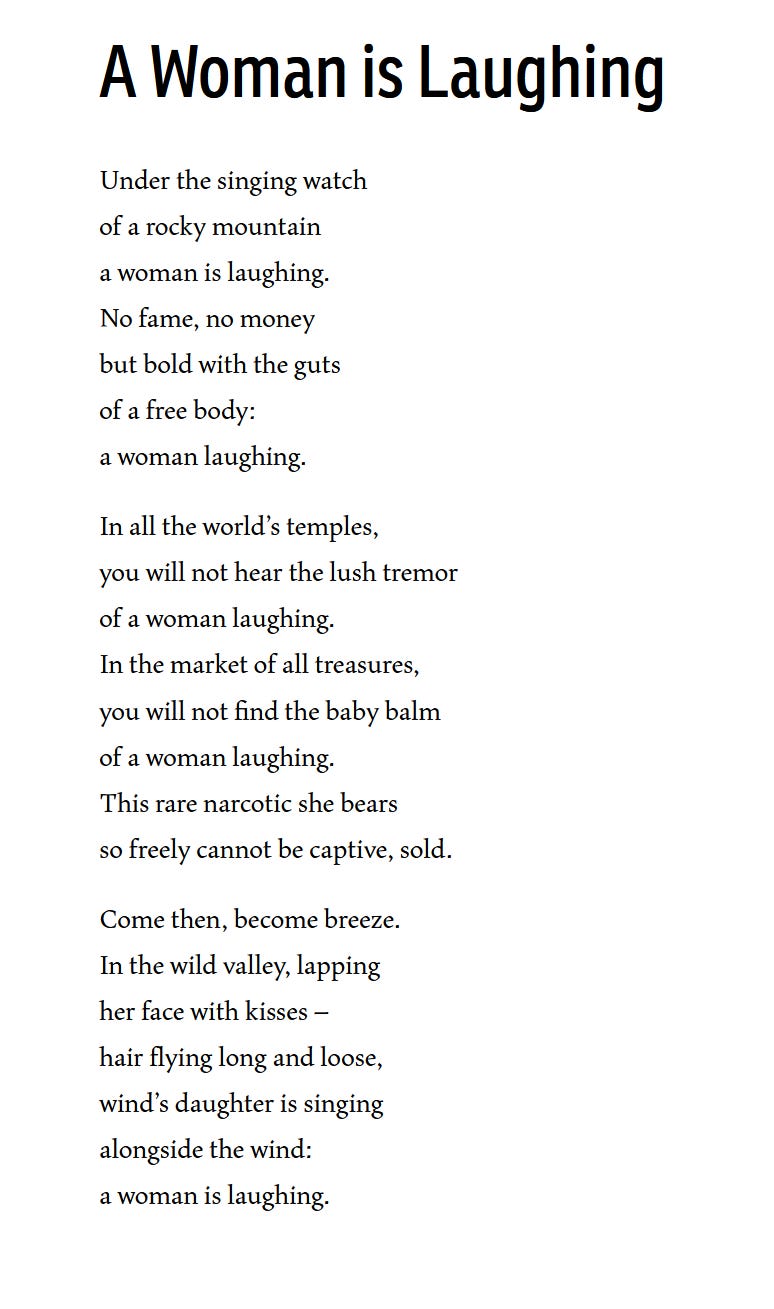
Inspired by “A Woman is Laughing” by Fahmida Riaz:
Write about laughter, the sound of it.
Pick one line to repeat throughout a piece, as Riaz has done.
Imagine life as the wind’s daughter.
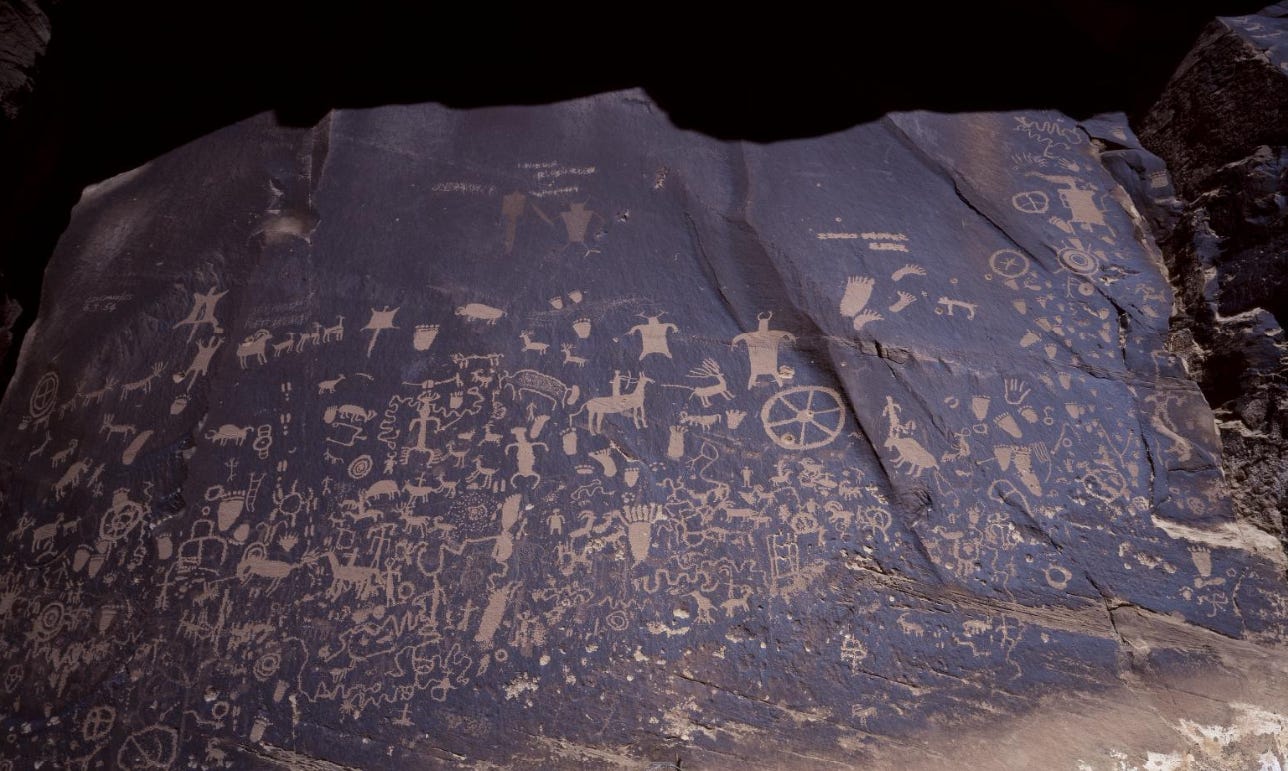
Jar of quotes
“…Oh, how I mined / for this belonging, scythe swinging, searching for my name.”
—excerpt from the poem “Throwback Night, Midway Skating Rink” by Brittany Rogers
“No writing is wasted. Did you know that sourdough from San Francisco is leavened partly by a bacteria called lactobacillus sanfrancisensis? It is native to the soil there, and does not do well elsewhere. But any kitchen can become an ecosystem. If you bake a lot, your kitchen will become a happy home to wild yeasts, and all your bread will taste better. Even a failed loaf is not wasted. Likewise, cheese makers wash the dairy floor with whey. Tomato gardeners compost with rotten tomatoes. No writing is wasted: the words you can’t put in your book can wash the floor, live in the soil, lurk around in the air. They will make the next words better.”
—Erin Bow
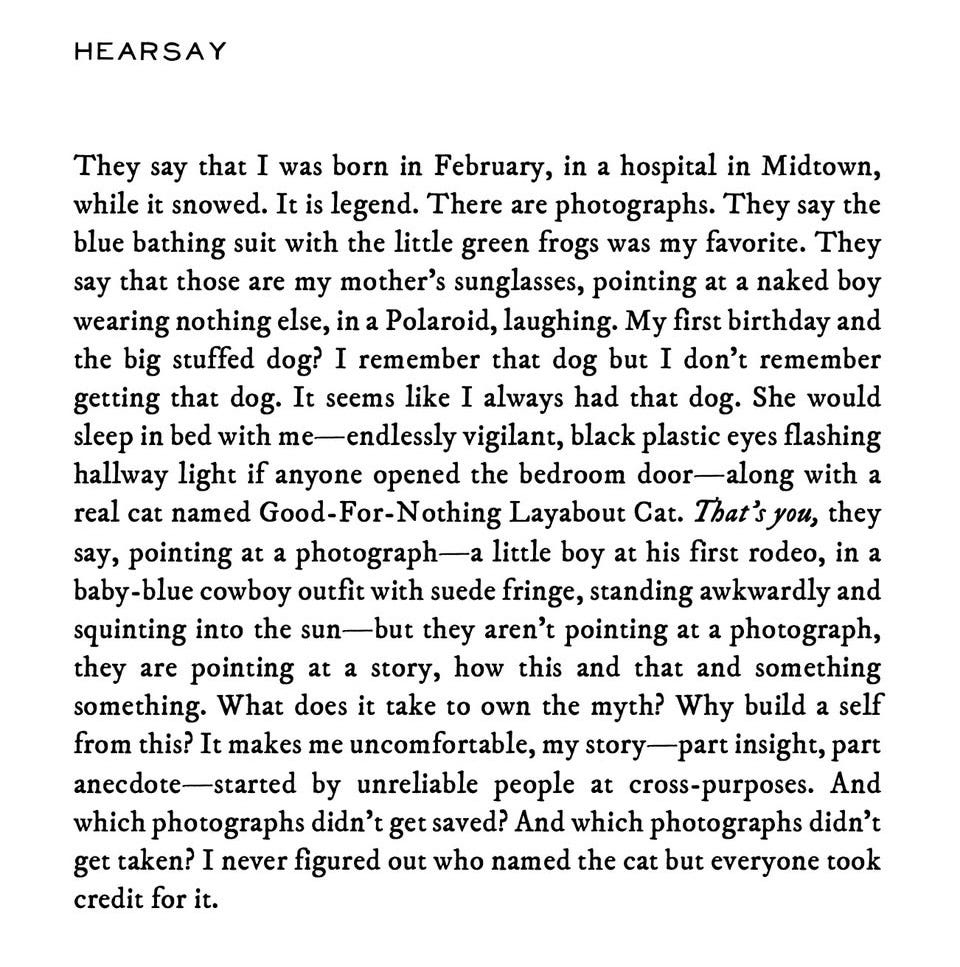
Write a fact about yourself as if it were a rumor.
Across the web
An astonishing Hall of Mirrors. (Flickr)
Students write more creatively when they repeat themselves. (Poetry Foundation)
Write “from the perspective of a piece of art.” (Perugia Press)
Bees have been granted legal rights in Peru. (Smithsonian)
In case you missed it…
Why storm chasers are called to the chase.
So we’re dust, the poet Li-Young Lee concludes.
What’s born from lightning and more prompts in my last post!

Excerpt from the World Atlas of Honey, University of California Press (pdf).